2010-04-30

Just ask Why?

Filed under: Prisoner — by Cologero @ 22:49

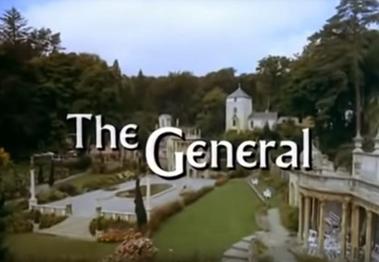
In Episode #6, titled “The General” of the Prisoner, there is a scene at an art class where the instructor is teaching creativity. Number 6 asks about the odd activities of three of the students.

  • One of the students is assiduously tearing out the pages of a book. The instructor explains that sometimes destruction must precede construction.
  • One of the students is standing on her head. That’s so she can get a different perspective on things, explains the instructor.
  • One of the students in napping in his chair. Well, we can’t be creative all the time, is the explanation.

Rather than demonstrating techniques to free up creativity, this scene illustrates the principles of social control.

  • Destruction of the social order.
  • Seeing the world opposite to the sane and normal way.
  • Lack of awareness.

The episode revolves around a concept called Speedlearn whereby a university level history course is taught in three minutes. It is reminiscent of how ideas and policies that used to be unthinkable not so long ago are now considered moral and desirable. The technique of Speedlearn is well known and in constant use.

In The Prisoner, the process is thwarted. Who can thwart the process now?
Whenever you are told to accept or believe what was never acceptable or believable before, just ask:

Why?

Copyright © 2009, 2010 Gornahoor Press

2010-04-29

The True Sage

Filed under: Philosophy,Vladimir Solovyov — by Cologero @ 22:27

Matter – the Platonic “other” – is effectively the sign of imperfection of the act and, in as much existing, is connected to that fundamental “injustice” about which Anaximander, Parmenides, and Empedocles speak – and it is, essentially, evil. There is no other evil beyond necessity, of which matter, brute existence, is the evidence; and as long as the “I” will not be able avoid the experience of matter – of this “other” against and beyond him – he will be imperfect: evil, impure, irrational.

~ Julius Evola, The Individual and the Becoming of the World

The fundamental difference between the Eastern way – as in Hinduism, Buddhism, Islam – and the Western way is the understanding of Will. The Eastern way understands the world as illusion and so the path to escape is world rejection. The Western way understands the World as the reflection of Spirit, just as the light of the Moon is the reflection of the light from the Sun.

The World, then, is not illusion, but is rather the creation of Spirit. The Spirit is Will, Unity, Logos; on its own (that is, separated and ignorant of the Divine source), the world would is blind and deterministic. Both the divine principle and world soul have the same goal: deification or theosis of all that exists. The world soul is blind and passive and does not know what to strive for; it strives to attain unity unconsciously. The human being can participate in the freedom of the Spirit and hence be the agent for the goal of the world process.

In The Justification of the Good, Solovyov describes the True Sage.

Vladimir Solovyov

In human life there is an opposition between that which is conformable to Ideas and in harmony with Reason, and that which contradicts the ideal norm. The true sage is no longer a simple hermit or a wandering monk, who has renounced life and is mildly preaching the same renunciation to others; he is one who boldly denounces the wrong and irrational things of life. Hence the end is different in the two cases. Buddha Sakyamuni peacefully dies after a meal with his disciples, while Socrates, condemned and put to prison by his fellow citizens, is sentenced by them to drink a poisoned cup. But in spite of this tragic ending, the attitude of the Greek idealist to the reality unworthy of him is not one of decisive opposition. The highest representative of humanity at this state—the philosopher—is conscious of his absolute worth in so far as he lives by pure thought in the truly existent intelligible realm of Ideas or of the all embracing rationality, and despises the false, the merely phenomenal being of the material and sensuous world.

In any case his attitude to the unworthy reality is merely one of contempt. The contempt is certainly different in kind from that characteristic of Buddhism. Buddha despises the world because everything is illusion. The very indefiniteness of this judgment, however, takes away its sting. If all is equally worthless, no one is particular is hurt by it, and if nothing but Nirvana is opposed to the bad reality, the latter may sleep in peace. For Nirvana is an absolute state and not the norm for relative states.

Now the idealist does possess such a norm and he despises and condemns the life that surrounds him not because it inevitably shares in the illusory character of everything, but because it is abnormal, irrational, opposed to the Idea. Such condemnation is no longer neutral, it has an element of defiance and demand. It is slighting to all who are bound by worldly irrationality and therefore leads to hostility, and sometimes to persecution and the cup with poison.

Copyright © 2009, 2010 Gornahoor Press

2010-04-28

Macho Macho Man

Filed under: Chivalry,Julius Evola — by Cologero @ 23:17

The Order of the Iron Crown

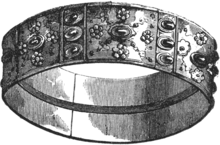
Iron Crown

The Iron Crown of Lombardy, dating from the seventh century, is said to contain one of the nails used in the crucifixion of Jesus. The Holy Roman Emperor Charlemagne used it at his coronation ceremony in Lombardy, as did several succeeding emperors. Even Napoleon used the crown when he claimed to be King of Italy. Two attempts to create an Order of the Iron Crown were made, first by Napoleon, then by King Victor Emmanuel; both came to nothing.

Apparently Julius Evola outlined his own ideas about the Order. Evola both acknowledges the inception of ascetic orders following the fall of the Roman Empire, while denying any link to the Lombardian Iron Crown, despite using the same name. (The published translation is incorrect, either accidently or deliberately to obscure the ancient connection.)

I’ll not bother to comment on the eight points as they are generic and innocuous in themselves. Certainly, it is unlikely to ever be implemented as they stand. While Cordelia for Lear has the good sense to stop at that point, another site adds a section about qualifications and structure.

What is curious about this ascetic order, especially since there are provisions for passing on membership to sons, is a comment about an affiliated formation of women who would serve as sexual surrogates for the men. Methinks Evola is trying to show he’s “got game”, but I don’t see the appeal. Maybe the dateless computer geeks who seem to be reading Evola these days relish the idea of 50 men sharing the same half dozen or so scanks. This would be sure to lead to attachments and the inevitable jealousies and conflicts that would disrupt the group. Any man with real world experience, instead of living in his mother’s apartment, can grasp this. Believe me, the women will turn out to be very demanding, to the point of diverting attention from the order’s purpose.

Then there is the delicate problem of recruitment. Perhaps in decadent Rome, such an order can find suitable women. But in Evola’s ancestral Sicily, those women are likely to be some man’s daughter or sister. I can guarantee this idea would not have gone over very well and the Sicilians had their own secret order to deal with such issues.

We have made available several posts about actually existing knightly orders, for example here. Notice the profound difference in values from what Evola proposes. I suggest that anyone interested in a chivalric or ascetic order should take a look at previously successful endeavors and not the laundry list of a man who was never part of any order.

Copyright © 2009, 2010 Gornahoor Press

2010-04-27

The Element of Trust

Filed under: Political Science,Valentin Tomberg — by Cologero @ 00:05

As we have already pointed out, a econo-socio-political system can be based on social relationships, liberal institutions or on man himself. Consider this from Tomberg’s doctoral dissertation.

A system, an order may be as useful and good as can be — ultimately it depends on people, who abandon, reliquish, reinterpret, falsify, or simply betray it. And the number of a system’s (loyal or disloyal) “guardians” need not be large. Often it takes only a few dozen people to destroy a generally recognized order. The big problem does not consist so much of which system to choose and how to organize the world, but of how and where to find people, who are truly of good will and who can be trusted. For ultimately, we are dealing with the element of trust. There is no system — neither domestic nor international — that can exist without trust as its final, practical, basic substance. For even with ten levels of control, there still must be — as the eleventh level — a final instance of control which can be trusted.

Copyright © 2009, 2010 Gornahoor Press

2010-04-25

The Degrees of Knowledge

Filed under: Tradition,Valentin Tomberg — by Cologero @ 22:17
The Degrees of Knowledge
Degree   Object Form
Doxa Opinion Phenomena Concept
Dianoia Rational Knowledge Thought Idea
Episteme Intuitive Knowledge Noumena Ideal

Tradition teaches that there are three degrees of knowledge:

  1. Doxa

    (opinion): our knowledge of the sensory or phenomenal world

  2. Dianoia

    (rational knowledge): knowledge based on thinking and logical deductions

  3. Episteme

    (intuition, gnosis, wisdom): direct knowledge of the essence of things

Gnosis remains largely ignored or misunderstood in our day. Voegelin, for example, designated Gnostics as those who believed in a received knowledge, that was really on the level of ideas, or dianoia. In popular parlance, intuition refers to an unexpected insight into the phenomenal world. However, in Tradition, gnosis is direct knowledge of the noumenal that is usually acquired through intense spiritual practices.

An example is the awareness and experience of oneself as a person, that is, as a center of consciousness and will. It sounds simple, but in actual practice there is much more to it. It takes efforts and exercises to become aware of one’s real I or true Will.

So much so, in fact, that the obvious is not noticed by those who claim to be the most intelligent and educated. For example, in an earlier post, we showed the example of someone who denies his will on the grounds that it defies the “laws of physics”. I could point to other examples on the Internet of intelligent people who deny the validity of their own consciousness and subjectivity, believing it to be no more than electrochemical processes in the brain. This puts dianoia as the highest form of knowledge.

It is episteme alone that provides certain and absolute knowledge. It intuits the ideal form, which is non-sensory and transcendent to the manifested world. At the level of dianoia, the ideal becomes idea, or the object of thought.

Thinking is limited to manipulation of ideas and can never reach certainty. The theories of science are always subject to future revision and deeper que stions have been debated ad infinitum, from the past and again into the future. Thinking is always about essences and can never penetrate the mystery of existence, the individual, the unique, the non-repeatable, the miraculous.

Doxa, or sensory awareness of the natural, or phenomenal, world is enthralled and deceived by the multiplicity of manifestations. Doxa recognizes concepts through a process of abstraction that extracts the common characteristics. Ideal, idea and concept correspond to the three degrees of knowledge.

Faith is related to gnosis. It does not refer to beliefs in sensory things or a body of ideas (the two lower levels of knowledge). True faith is belief in ideals, or noumenal reality. It involves the entire personality, especially the Will. Meditating on the truths of Faith can lead to authentic Gnosis.

Copyright © 2009, 2010 Gornahoor Press

2010-04-24

The Hair of the Dog …

Filed under: Current Events — by Cologero @ 16:24

They say that the cure for a hangover is the “hair of the dog that bit you”. This is a homeopathic remedy in the sense that a very dilute portion of the poison that caused the illness provides the method for its cure.

Nevertheless, within the past few weeks I have heard on the Internet two serious proposals from “defenders of Western civilization” (albeit in quite different ways) about how to reach “young people”. And they both proposed (independently) that what “young people” want consists of multimedia presentations with music, snappy graphics, flashing images, lively web sites …

Unfortunately, that is the very disease they suffer from! Perhaps there is a proper homeopathic dose to apply, but a full dose of the same poison is sure not to have the desired effect. In the 60s, Marshall McLuhan pointed out that the “medium is the message”. Therefore, an attempt to change the content while retaining the same medium will not have the desired effect of changing the “message”. At best, there will result isolated or shallow “conversions”, but those loyalties can easily shift to the next big media event. And scattered counter-cultural elements will not be able to compete with the barrage of large-scale public media events.

The poison is the very dependence on sensory stimulation and its kaleidoscopic variations. The only effective antidote, then, is a shift from the stimulation of the senses to the stimulation provided by the apprehension of ideas. For this, Good and True ideas must be communicated. And their dissemination can be slow and tedious. There is no expectation that the “masses” will respond to such an appeal, but an elite will gradually form around them. This elite will server as the fulcrum of the lever that will effect permanent change.

Copyright © 2009, 2010 Gornahoor Press

2010-04-21

Hollywood Action Flicks

Filed under: Current Events,Gilbert Chesterton,Literature,Walter Scott — by Cologero @ 23:47
Ivanhoe

In his inimitable way, Gilbert Chesterton, in a discussion about adventure or romance novels [NOTE: not meant in the contemporary sense], anticipates the plots and defects of Hollywood action movies. The title of the essay is “The Position of Sir Walter Scott”; in this segment he compares Scott to later adventure novel authors.

It is in this quality of what may be called spiritual adventurousness that Scott stands at so different an elevation to the whole of the contemporary crop of romancers who have followed the leadership of Dumas.

In contrast this is how he describes Scott’s inferiors:

There has, indeed, been a great and inspiriting revival of romance in our time, but it is partly frustrated in almost every case by this rooted conception that romance consists in the vast multiplication of incidents and the violent acceleration of narrative. The heroes of Mr. Stanley Weyman scarcely ever have their swords out of their hands; the deeper presence of romance is far better felt when the sword is at the hip ready for innumerable adventures too terrible to be pictured. The Stanley Weyman [1855-1928, adventure novel writer] hero has scarcely time to eat his supper except in the act of leaping form a window or whilst his other hand is employed in lunging with a rapier. … In short, Mr. Stanley Weyman is filled with the conviction that the sole essence of romance is to move with insatiable rapidity from incident to incident.

You see the parallels with contemporary action films? Nothing but chase scenes and fight scenes for two hours, with barely a plot intertwined: the later Die Hard movies, the incessant and repetitive battles of The Matrix, the faux fights of Kill Bill. And these are the better ones, of a list that can go on and on.

In contrast, this is what he says about Sir Walter Scott:

In the truer romance of Scott there is more of the sentiment of “Ho! Still delay, thou art so fair”; more of a certain patriarchal enjoyment of thins as they are – of the sword by the side and the wine cup in the hand. Romance, indeed, does not consist by any means so much in experiencing adventures as in being ready for them.

A criticism of Scott is that his descriptions of details is too monotonous; in one case about the details of armour and costume, GKC responds:

The only thing to be said about the critic is that he had never been a little boy. … Not being himself romantic, he could not understand that Scott valued the plume because was a plume, and the dagger because it was a dagger. Like a child, he loved weapons with a manual materialistic love, as one loves the softness of fur or the coolness of marble. One of the profound philosophical truths which are almost confined to infants is this love of things, not for their use or origin, but for their own inherent characteristics, the child’s love of the toughness or wood, the wetness of water, the magnificent soapiness of soap. So it was with Scott, who had so much of the child in him.

Yes, the half-educated man can only deal with his abstractions. But the boy prefers direct sensual experience. And, yes, we boys love pageantry, dressing up in costume, and especially our weapons.

Copyright © 2009, 2010 Gornahoor Press

2010-04-20

The Dawn of the Gods

Filed under: Auguste Comte,Vladimir Solovyov,cosmology — by Cologero @ 22:47

We all know about the Twilight of the Gods and how they have abondoned us, but few dare to ask where they came from in the first place.


Auguste Comte proposed that humanity has progressed from belief in polytheism to monotheism, then to an all embracing metaphysical or ideological principle, and finally to positivism. While the sequence may be somewhat correct, it represents not progress, but rather a fall. There is a primordial consciousness of unity, inwardly united with the divine Logos. The role of the human being is to bring this unity into factual realization in nature, or manifestation. As such, the human being is divided, with the consciousness of unity that unites him with God, and a material existence that unites him with the natural world.

By rebelling against the divine principle, human beings fall under the power of the material principle. The Logos was once the center of consciousness, but afterwards is experienced as an external law and hence a burden. Enthralled by the material world, he loses his center and becomes just another entity in nature. Initially, he experiences this disunity in consciousness and the idea of multiple gods, or polytheism arises. Rather than seeking unity back at the source, he looks outside himself and creates various philosophical and ideological systems based on an external principle, be it matter, thought, evolution, genetics, race, and so on. Still dissatisfied, he thinks that the facts and the laws explaining these facts will suffice. But not accumulation of facts of or theories about nature can recover the lost unity.

In this passage, Vladimir Solovyov describes how the gods arise in the cosmogonic process:

For consciousness that has lost the inner unity of the all in the divine Spirit, the only external unity that becomes accessible is that produced by the cosmic action of the divine Logos upon the world soul, which is the matter of the cosmic process. The consciousness of humanity seeks to reproduce in itself those determinate forms of unity that had already been generated by the cosmogonic process in material nature. The unifying forces of material nature (the offspring of the Demiurge and the world soul) appear now in consciousness as principles that determine it and give it content. These forces gradually manifest themselves and reign in consciousness as lords not only of the external world but even of consciousness itself, as genuine gods. Thus, this new process is, first of all, a theogonic process. This does not mean, of course, that these dominant principles were created in this very process, nor does it mean that humanity invented its own gods. We know that these principles existed prior to humanity as cosmic forces.
In that capacity, however they were not gods, for there are no gods without worshippers. They become gods only for the human consciousness that recognizes them to be such, after it has fallen under their dominion as the result of its separation from the one divine center.

Copyright © 2009, 2010 Gornahoor Press

2010-04-19

The Way Back

Il cattolicismo è veramente la religion più perfetta, come la filosofia europea moderna è la più perfetta filosofia: sono insieme le più alte creazioni dello spirit ariano.

(Catholicism is truly the more perfect religion, just as modern European philosophy is the most perfect philosophy: together, they are the highest creations of the Aryan spirit.)

~ Giovanni Gentile

In earlier times, Christianity was comprehensible to one, incomprehensible to another; but only our age has succeeded in making it repellent and mortally boring.

~ Vladimir Solovyov

We shall not cease from exploration
And the end of all our exploring
Will be to arrive where we started
And know the place for the first time.

~ T.S. Eliot (Four Quartets)

It is often stated that the West is Christian, particularly the USA, or at least that it retains its Christian nature. According the Guenon, this is the opposite of the truth:

It is said that the modern West is Christian, but this is a mistake; the modern outlook is anti-Christian because it is essentially anti-religious; and it is anti-religious because, in a still wider sense, it is anti-traditional; it is this that gives it its particular character and causes it to be what it is.

He continues:

Everything of any value still to be found in the modern world came to it from Christianity, or at any rate through Christianity, which brought with it the whole heritage of former traditions and has kept that heritage alive.

This is the important point: whatever is of value in paganism has been incorporated into the Christian religion. The later historical deviation that tried to “purify” Christianity of such elements, only succeeded in ushering in the modern world.

Where, even in Catholicism, are to be found the men who understand the deeper meaning of the doctrine they profess outwardly, and who are not simply content with “believing” in a more or less superficial way, sentimentally rather than through the intelligence, but who really “know” the truth of the religious tradition which they claim for their own? One would indeed welcome some evidence of the existence of at least a few such people, for that would be the greatest and perhaps the only hope of salvation for the West.

Perhaps Guenon did not look East for the answer, or else he looked too far East, so he missed the ideas emanating from Russia. Vladmir Solovyov said the same thing, decades before Guenon: what the believer believes in faith, the metaphysician knows, provided he makes the necessary efforts. Solovyov admits that Christianity offers nothing original in its metaphysics, which is the basis for all primordial traditions whether for pagans, Christians, or the Oriental religions.

As for realistic possibilities, Guenon writes:

It seems quite clear that there is now but one organization in the West that possesses a traditional character and that has preserved a doctrine capable of serving as an appropriate basis for the work in question: that organization is the Catholic Church. It would be enough to restore to the doctrine of the Church, without changing anything of the religious form that it bears outwardly, the deeper meaning really implicit in it, but of which its present representatives seem no longer to be conscious, just as they have ceased to be conscious of its essential unity with other traditional forms.

This would sound incredible both to those who reject Catholicism out of hand, but also to those within the Church who do not see it that way. From a metaphysical point of view, we must be clear about whether we are speaking of the real or the ideal. Clearly, the “real” church, that is, in its actual material manifestation does not demonstrate the ideal characteristics mentioned either by Guenon or Solovyov; in Guenonian language, we would say it exists only virtually.

There is a lively debate going on about whether Catholicism or a reconstituted paganism is the future of the West. Unfortunately, it is usually done on the exoteric level, or solely about exterior forms. This amounts to little more than debates over personal preferences and tribal affiliations. But esoterically, to be Traditional, they must agree in metaphysics. The Hermetic philosophy in the stream from Hermes Trismegistus to Pythagoras to Plato to the Neoplatonists and much more serves as the foundation both for paganism and Catholicism. The full implications of this must be understood first. Then the discussion can turn to which exterior form best preserves the primordial tradition or is better suited to the spiritual temperament of the West.

Copyright © 2009, 2010 Gornahoor Press

2010-04-18

The Good Shepherd

Filed under: Christianity,Vladimir Solovyov — by Cologero @ 22:56

The Gospel for the Second Sunday after Easter is John 10:11-15, the parable of the Good Shepherd.

In this passage, Jesus compares himself to the Good Shepherd who watches over his sheep and would give his life for them. The Shepherd is clearly the Logos, the Word made flesh. The flock is not so clear. It is obviously not a mechanical aggregate of individual sheep who just happen to come together. On the contrary, they form a unity, which derives from the primordial unity of the divine Logos.

In the Sophiology developed and refined by Vladimir Solovyov, the flock, then, is the unity produced by the Logos, that is, Sophia, the world soul or ideal humanity. Sophia is the mediatrix between the multiplicity of individuals (the real content of her Life) and the absolute Divine unity (her ideal principle).

Furthermore, Jesus says, “I am the good Shepherd and I know Mine, and Mine know Me, as the Father knoweth Me, and I know the Father.” Note in this passage the emphasis on “knowing”, not on faith or believing. And not just a common knowing, but analogously to how the Logos knows the Father. This type of knowing is superior to rational thinking, it is, rather, a direct intuition of identity, for the sheep know who they are and whom they belong to. They have made themselves meek in order to be able to follow.

When this knowledge is lost, the sheep separate from the flock and become prey to the wolves. With the forgetfulness of Divine unity, that is, when the hireling is watching over the flock, “the world soul ceases to unite all within herself, all things lose their common bond and the unity of cosmic creation breaks up into a multitude of separate elements.” (Solovyov) With the separation of an individual: “when it is detached from the whole by exciting in itself its own peculiar will, the particular elements of the universal organism lose their common bond in the world soul and, left to themselves, are doomed to discordant, egoistic existence. The root of such existence is evil and the fruit, suffering.” (Solovyov)

Copyright © 2009, 2010 Gornahoor Press

Next Page »