2010-08-22

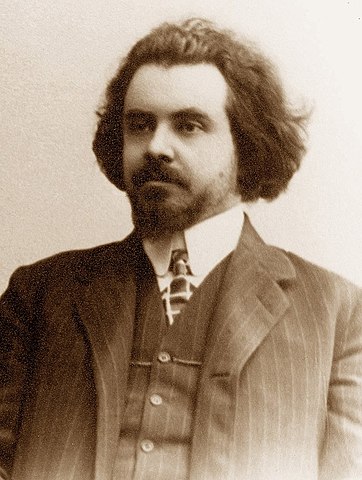
Berdyaev and the Mirage of Progress

Filed under: Nicolas Berdyaev,Russia,Science — by Cologero @ 11:20
Tags:

In these passages, taken from The Destiny of Man, Berdyaev reveals his origins from Russian Hermetism and that he is more than a “philosopher” in the academic sense. He rejects the notion that we can study man as he is today and then extrapolate back to his origins. Like Guenon, he sees modern savages as a degenerate form and not as the proto-man. Science shows us nothing about origins, since it merely mask “philosophic assumptions” as scientific fact. Interestingly enough, he proposes that the world was more “plastic” than it is now. Of course, this is identical to the claims of Tradition as articulated by Guenon and Evola. By “Akashic Records”, we recognize Evola’s Traditional Method or the technique of Hermetic meditation.

Anthropologists and sociologists have devoted a great deal of attention to the primitive man but their methods and principles of investigation were determined by the evolutionary theory of the second half of the nineteenth century. They studied modern savages and from them drew conclusions about the primitive man. Scientific investigation in the strict sense was from the nature of the case impossible, but as a result of philosophic assumptions it was believe that, to being with, man was at a savage, half-animal stage and then, up to the nineteenth century, he gradually progressed. Man’s distant past was inferred from his present, from savages and animals. The scientists’ imagination was so poor that in man’s distant past they could conceive of nothing different from what they found in modern times at the lower stages of life. But ancient man and his life were infinitely more significant and mysterious than anthropologists and sociologists suppose. In this respect theosophists and occultists are nearer the truth. There is something to be said for the Akashic Records, the Chronicle of the world, though the idea is easily vulgarized. At the dawn of humanity the world was at a different stage than it is now. It was more plastic, and the limits which divide this world from other worlds were less sharply marked. We are told this, in a covert form, in the book of Genesis.

Berdyaev continues with his critique of scientific evolutionism and denies that the study of primitive people of today or of animal behavior can tell us anything about the mentality of ancient civilizations. Like Guenon, he denies a unitary notion of progress. On the contrary, civilizations arise and die. The myth of Atlantis may serve as a warning to us. Rather than being the pinnacle of human evolution, modern man is more likely the degenerate, fallen, and weaker product of something much greater.

The evolutionary theory of the nineteenth century has been disproved both by science and philosophy, and cannot be used as the basis of the methods and principles of inquiry. It is inadmissible to transfer to the ancient, primitive humanity our habits of thought and feeling and our view of the world. Everything then was different, not at all similar either to the savages or to the animal world of our day. Levy Bruhl, criticizing Taylor and Fraser, tries to discover the nature of primitive thought, quite different from civilized people’s thought, but his modern positivist and rationalistic mentality prevents him from understanding it. What he calls la loi de participation shows that primitive thought was of a higher type than that of the nineteenth-century man for it expressed the mystical nearness of the knower to his object. Man loses as well as gains through the growth of civilization. He not only progresses but degenerates, falls, grows weaker and poorer. There is no doubt that some ancient knowledge connected with the proximity to the sources of being was lost by man in the course of time, and only a memory of it is left to him. There is no doubt that there existed great civilizations in the past, such as those of Babylon or Egypt, and that their fall meant a period of regress and a loss of tremendous achievements. There are considerable reasons to believe in the truth of the myth about Atlantis, where a very high civilization became morally degenerate and perished. It is far more likely that the savages as we know them are a product of degeneration and retrogression, and do not represent the primary stage of human development. In speaking of the primitive moral consciousness as we know it, we must not draw conclusions with regard to the first origins of mankind. The facts that lend themselves to study and observation are chronologically secondary and not primary.

Copyright © 2009, 2010 Gornahoor Press

2009-10-24

Woman is the bearer of the sex-element

Filed under: Nicolas Berdyaev,Quotes,Sexuality — by Cologero @ 18:52

Woman is the bearer of the sex-element in this world. In man sex is more differentiated and specialized: in woman it is diffused through the whole tissue of the organism, through the whole structure of the soul. In man sexual attraction demands more immediate satisfaction than in woman, but he is more independent of sex than is woman: he is a less sexual being. Man is greatly dependent, sexually, on woman: he has a weakness for the other sex, a radical weakness which may be the source of all his weaknesses.

And for man his weakness for woman is something degrading. By himself man is less sexual than woman. In woman there is nothing which is not sexual: she is sexual in her strength and in her weakness, sexual even in the weakness of her sexual desire. Woman is the cosmic universal bearer of the sexual element, of the elemental in sex. The element of sex natural to the genus is a feminine element. The power of the race (genus) over man is realized through woman. This power entered the world of nature and took control of it through the first mother, Eve. Eve is the natural-racial womanliness.

The creation of Eve brought the old Adam under the power of race-sexuality, fettered him to the natural world, to "this world." "The world" caught Adam and rules him through sex: Adam is fettered to natural necessity at the point of sexuality. Eve’s power over Adam became the power of all nature over him. Man, bound to the birth-giving Eve, became the slave of nature, the slave of a womanliness separate and differentiated from his androgynous image and likeness of God. The attitude of the male man towards womanliness is the root of his attitude towards nature. He can escape neither womanliness nor nature—there is nowhere where he can get away. Deliverance is possible only through the new Adam, who comes into the world through a new womanliness. The sinful power of female nature over the fallen man began with the woman, Eve: with the Virgin Mary began man’s liberation from that natural power. In the Virgin Mary the earth takes into its house the Logos, the new Adam, the Absolute Man.

And if the fall and enslavement of the old Adam, the old man, confirmed in the world the rule of nature-racial birth through the sexual act, the new Adam, the new man, could be born only of a virgin, who conceived by the Spirit.

The new birth from a virgin was a mystical conquest of the old birth in the natural order the “this world.” Eternal womanliness, as the basis of a new world, liberated from sin, shall not give birth as the result of the sexual act of man. Eternal womanliness bears within itself release from natural necessity, since natural necessity rules over man only through the birth-giving sex. The religion of redemption denies both race and the sexual act and set up the cult of eternal womanliness, the cult of a Virgin giving birth only through the Spirit.

~ Nicolas Berdyaev, from The Meaning of the Creative Act

Copyright © 2009, 2010 Gornahoor Press